Hvac Troubleshooting Symptom Checker Online
Use Hvac Troubleshooting Symptom Checker Online to review HVAC symptoms, identify possible causes, and find basic troubleshooting checks before service.
Please complete this field to continue.
Please complete this field to continue.
Please complete this field to continue.
Please complete this field to continue.
Please complete this field to continue.
Results
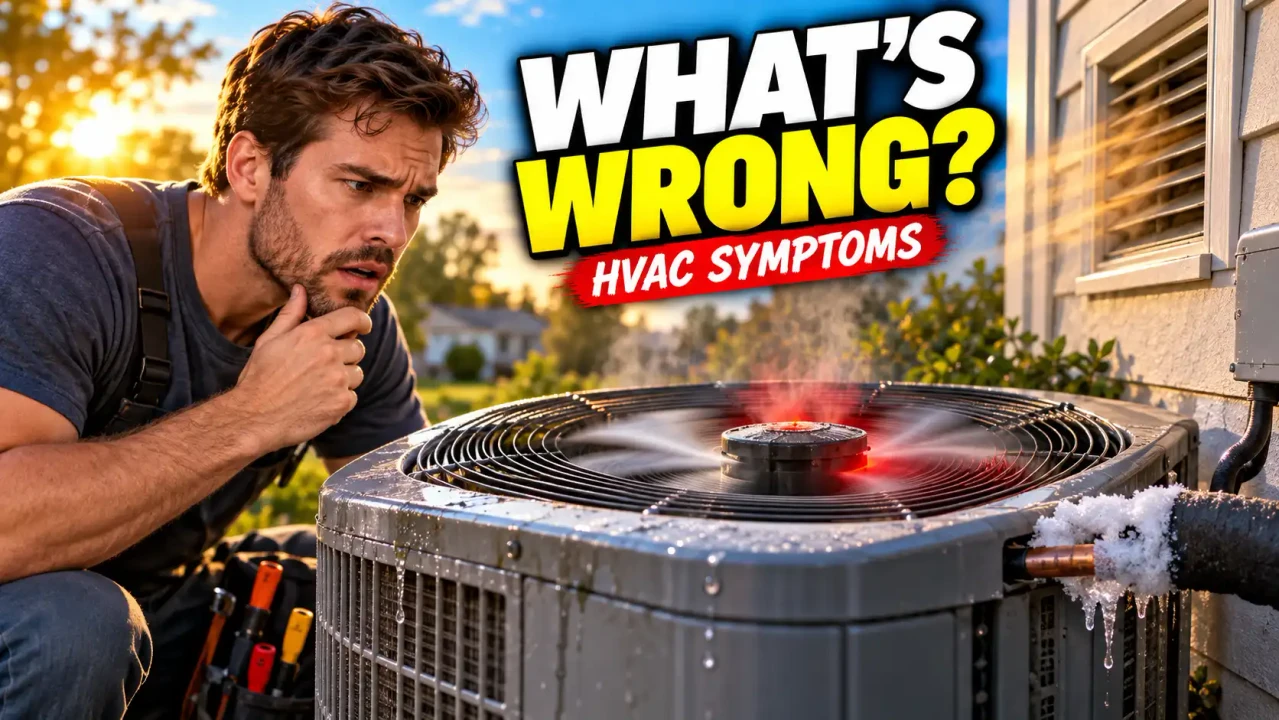
Hvac Troubleshooting Symptom Checker Online
TL;DR Summary
Hvac Troubleshooting Symptom Checker Online helps users review HVAC symptoms and narrow down common possible causes and basic checks. It is a troubleshooting aid rather than a substitute for hands-on diagnosis, and the supplied tool information does not confirm how entered data is stored or transmitted.
About This Tool
Hvac Troubleshooting Symptom Checker Online is designed to help homeowners, renters, property managers, and other HVAC users make sense of common heating and cooling problems. Instead of starting with a long list of unrelated repairs, a symptom checker focuses on what the system is doing now and uses those observations to narrow the possible causes.
Typical HVAC symptoms can include a system that does not turn on, weak airflow, rooms that are not reaching the thermostat setting, air that is not heating or cooling as expected, unusual cycling, water around the equipment, or other changes in normal operation. The exact questions and fields available on the live tool should be followed as displayed because the supplied tool materials identify the purpose of the checker but do not expose a final field-by-field implementation.
The tool is intended for an initial troubleshooting review. It can help organize observations before you decide what to check next or whether to contact an HVAC professional. It should not be treated as a definitive diagnosis. Several different HVAC problems can produce similar symptoms, and the real cause may depend on equipment type, installation, age, maintenance history, electrical conditions, airflow, controls, refrigerant conditions, ductwork, or other factors that cannot be confirmed from symptoms alone.
What You May Check
Depending on the symptom and the information requested by the tool, useful observations can include whether the equipment starts, whether the thermostat appears to call for heating or cooling, whether air is coming from the supply registers, whether airflow feels weak, whether the temperature changes as expected, and whether there are visible signs such as water, ice, dirt, or unusual equipment behavior.
Basic HVAC troubleshooting often starts with simple conditions that can affect system operation. ENERGY STAR recommends checking thermostat settings, inspecting or changing filters, checking condensate drains, and maintaining coils and other system components as part of routine HVAC care. A dirty or clogged filter can restrict airflow, while a blocked condensate drain can affect equipment operation and create water problems.
Some problems should not be handled as a DIY repair. Refrigerant work is an important example. Under EPA Section 608 requirements, technicians who perform activities that could release refrigerant from covered stationary air-conditioning equipment generally must be certified. Users should not use a symptom checker as a reason to open a refrigerant circuit, add refrigerant, remove refrigerant, or perform other work that requires appropriate training and certification.
Who Can Use It?
This tool can be useful for someone trying to understand an HVAC problem before calling a contractor, a property manager documenting a tenant complaint, or a homeowner preparing useful information for a service visit. It can also help users separate simple observations from repairs that require specialized testing.
For example, knowing that a system is running but producing weak airflow gives a technician different information than knowing that the system does not start at all. Similarly, noticing water near a condensate drain can point toward a different troubleshooting path than a system that runs continuously without reaching the desired temperature.
How to Use
- Step 1: Identify the main symptom you are experiencing, such as no operation, poor heating or cooling, weak airflow, unusual cycling, or another noticeable problem.
- Step 2: Enter or select the observations requested by Hvac Troubleshooting Symptom Checker Online. Use the actual condition of the equipment rather than guessing at the cause.
- Step 3: Review the possible causes or troubleshooting guidance returned by the checker and compare it with what you can safely observe.
- Step 4: Perform only basic checks that are appropriate for a homeowner or other unqualified user, such as checking thermostat settings or inspecting an accessible filter.
- Step 5: If the result points toward electrical, refrigerant, combustion, sealed-system, or other specialized work, stop and contact an appropriately qualified HVAC professional.
- Step 6: Give the technician the symptoms and observations you collected so the service visit can start with better information.
Technical Explanation and Logic
Hvac Troubleshooting Symptom Checker Online is a symptom-based troubleshooting tool rather than a conventional numerical calculator. No single mathematical formula can reliably diagnose an HVAC fault from a symptom alone.
The underlying standard troubleshooting approach can be represented as:
Observed symptoms + system observations → possible causes → appropriate basic check or professional-service recommendation
For example, weak airflow may lead to checks involving the filter, registers, blower operation, ductwork, or other airflow-related conditions. Poor cooling may have several possible causes, including thermostat issues, airflow problems, dirty coils, drainage problems, or refrigerant-related faults. A system that does not turn on may require different checks involving the thermostat, electrical supply, controls, or equipment condition.
This is a decision process, not a formula that produces a guaranteed diagnosis. The exact internal decision tree of the supplied tool is not exposed in the provided materials, so this page does not claim a specific hidden scoring system, probability model, or diagnostic formula.
Preset Examples and Quick Reference
| Observed Symptom | Useful Observation | Possible Troubleshooting Area |
|---|---|---|
| System does not start | Check whether the thermostat is calling for heating or cooling | Thermostat, power, controls, or equipment operation |
| Weak airflow | Inspect an accessible air filter and supply airflow | Filter, blower, ductwork, registers, or airflow restriction |
| Cooling is poor | Record whether the system runs and whether airflow is normal | Thermostat, airflow, coils, drainage, or refrigerant-related conditions |
| Water near equipment | Look for visible condensate or drain issues without opening equipment | Condensate drainage or related HVAC maintenance issue |
These examples are troubleshooting categories, not diagnoses. The same symptom can have multiple causes, and a professional may need measurements or equipment-specific testing to identify the actual fault.
Worked Troubleshooting Example
Suppose a homeowner reports that the air conditioner is running but the rooms are not cooling properly. The useful starting point is not to assume that the refrigerant is low. The user can first document the thermostat setting, whether the indoor blower is operating, whether airflow feels normal, whether the filter is visibly dirty, and whether there are visible drainage or ice-related signs.
If airflow is weak, airflow-related causes deserve attention. If airflow is normal but cooling remains poor, additional causes may need professional evaluation. A refrigerant issue should not be assumed from symptoms alone, and refrigerant-system work should be left to the appropriate certified technician.
Why Use This Hvac Troubleshooting Symptom Checker Online & How Our Hvac Troubleshooting Symptom Checker Online Beats the Competition
| Method | Ease of Use | Calculation Speed | Best For | Limitations |
|---|---|---|---|---|
| Toolhox Hvac Troubleshooting Symptom Checker Online | Guided symptom review | Immediate guidance from entered information | Organizing symptoms and identifying possible troubleshooting areas | Cannot replace hands-on testing or professional diagnosis |
| Manual Troubleshooting | Depends on user knowledge | Depends on the person and process | Users who already understand HVAC diagnostic procedures | Easy to overlook possible causes or safety issues |
| Spreadsheet | Requires setup | Depends on the spreadsheet design | Custom checklists and record keeping | Requires users to build or maintain the logic |
| Professional HVAC Diagnostic Software | Often requires technical knowledge | Depends on the system and measurements available | Detailed professional diagnosis | May require specialized equipment, measurements, training, or access |
The practical value of a symptom checker is its role as an organized starting point. It can help users describe what they are seeing instead of immediately guessing which component has failed. It should be viewed as an information and troubleshooting aid, not as a replacement for professional HVAC diagnostic work.
Assumptions and Limitations
- The tool is intended to help interpret reported HVAC symptoms, not certify a diagnosis.
- Symptoms alone may not identify the failed component.
- The exact equipment type, model, installation, controls, and maintenance history can affect troubleshooting.
- Electrical, combustion, refrigerant, sealed-system, and other hazardous or specialized work may require a qualified professional.
- Do not bypass safety controls or continue operating equipment when there is a serious safety concern.
- Do not use the checker as a substitute for required measurements, manufacturer instructions, building requirements, or professional inspection.
- The supplied tool materials do not document a specific data-storage or transmission policy, so users should avoid entering sensitive information unless the live page clearly explains how submitted information is handled.
For systems involving gas or oil combustion, electrical hazards, refrigerant circuits, burning smells, smoke, suspected carbon monoxide, or other immediate safety concerns, stop troubleshooting and use appropriate emergency or professional services. The symptom checker is most useful for organizing information and identifying sensible next steps, not for deciding whether a hazardous system is safe to operate.